COLLABORATIVE TILE LINES
This is a blurb about collaborative tile! It’s going to be so fun to read. Read more about each of our collaborations below.
Current artists
Simon Levin | Adam Field | Moon do Bang
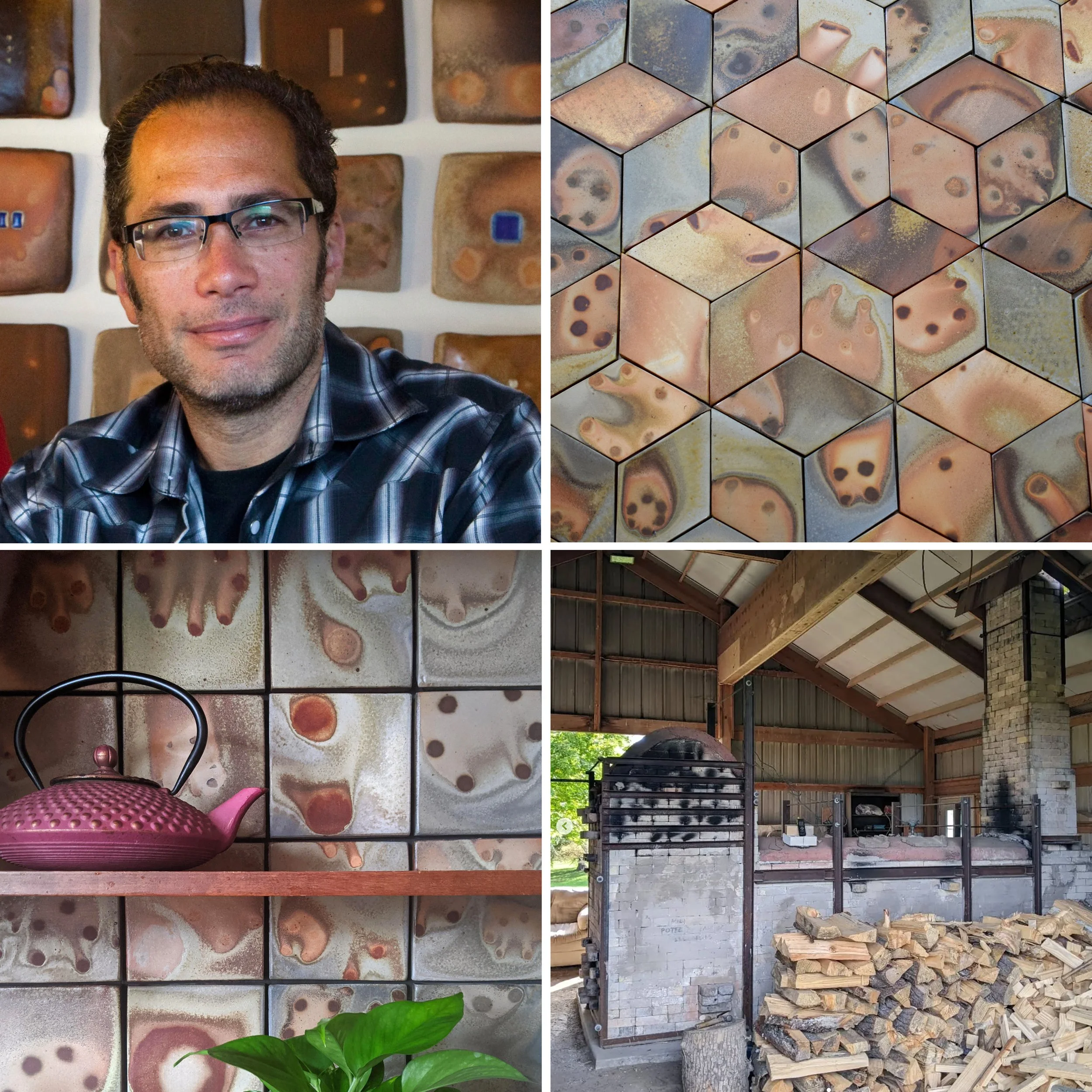
Pareidolia Wood Fire Tile | FLM + SIMON LEVIN
Pareidolia (parr-i-DOH-lee-ə) is the tendency for incorrect perception of an object, pattern, or meaning known to the observer, such as seeing shapes in clouds, seeing faces in inanimate objects, nature, or abstract patterns, or hearing hidden messages in music.
Each of these incredible tiles are created in our Petaluma, CA studio and woodfired by world renowned master potter, Simon Levin in Mill Creek, Wisconsin in his Anagama kiln. During the firing process the wood ash and vapor travel throughout the kiln imparting the tile with it’s unique flashing and patterns. No two tiles are completely alike and yet as a group they blend together to create something even more beautiful than the sum of it’s parts.
The tile are fully vitrified and yield variation, they are durable, and great for kitchens, bathrooms, fireplaces, and floors with light to moderate traffic.
FROM THE ARTIST
“The woodfire process produces one of a kind seductive surfaces. Each tile is a record of the flame that moves through the kiln, depositing glaze and evoking color. I have recently developed a technique that allows me to fire a limited amount of high quality tile that brings a unique look and feel to your home. Made from specially developed porcelains and stonewares no two tiles are the same. This is my eye and expertise as an artist culminating in these captivating surfaces. A lot of love and labor have gone into this product and I am pleased to be working with FLM Ceramics to introduce you to this exciting limited line of tile.”
Q+A with Simon Levin
1. When did you begin woodfiring and what is your favorite thing about woodfired surfaces?
I first fired a wood kiln in 1990, and fell in love with the work, the way the activity translated into results. The splitting of the wood, the direct connection with kiln as tool, and how much the pots felt earned. It was not until 1993 when I realized I could capture the feeling of the flame on the work, the clay became the photographic paper, exposed to the flame and recording the passage. This has become my favorite thing about woodfiring.
2. Where is your studio? Is there anything about your location that inspires you?
My studio is in Pawnee, Illinois. It is not a place that has my heart yet. I love kayaking and fishing here, but I miss mountains and rolling hills, I miss the deep snow, and swimming holes of Wisconsin. But I am awed by the flatness of the plains, the broad stretches of views, the small variations within the sameness, and the long long plow lines of big farms.
3. I'm fascinated by the concept of pareidolia. What is it about the tile that inspired you and Forrest to name the tile line this?
The name came from Dan Anderson. It was not a word I knew. It has always been an issue though, painting with elements lights up the human brain, we look for patterns and familiarity in seas of information. Often as a way not to miscommunicate ideas I have intentionally avoided this effect. Within the tile making though this is the first time I am really embracing the effect of pareidolia. I am opening myself to it, because it brings in attention, draws people closer, and makes connections. The images we see in the flame create narratives and encourage imagination. What could be better?
4. If you could tile any location in your home with Pareidolia Tile what would you tile?
In my kiln, as I type this, I have enough tile to do the gas fireplace on my sun porch. The tile will border the fireplace vertically and cover a two-foot horizontal pad in front of the fireplace. I am thinking of organizing the tile such that all the flame marks are pointed upwards so that the fire feels like it’s leaving the confines of the stove and warming up the whole room. I am totally excited about this, and hope to have it installed in a month or so.
Terrascapes Tile | FLM + Adam field
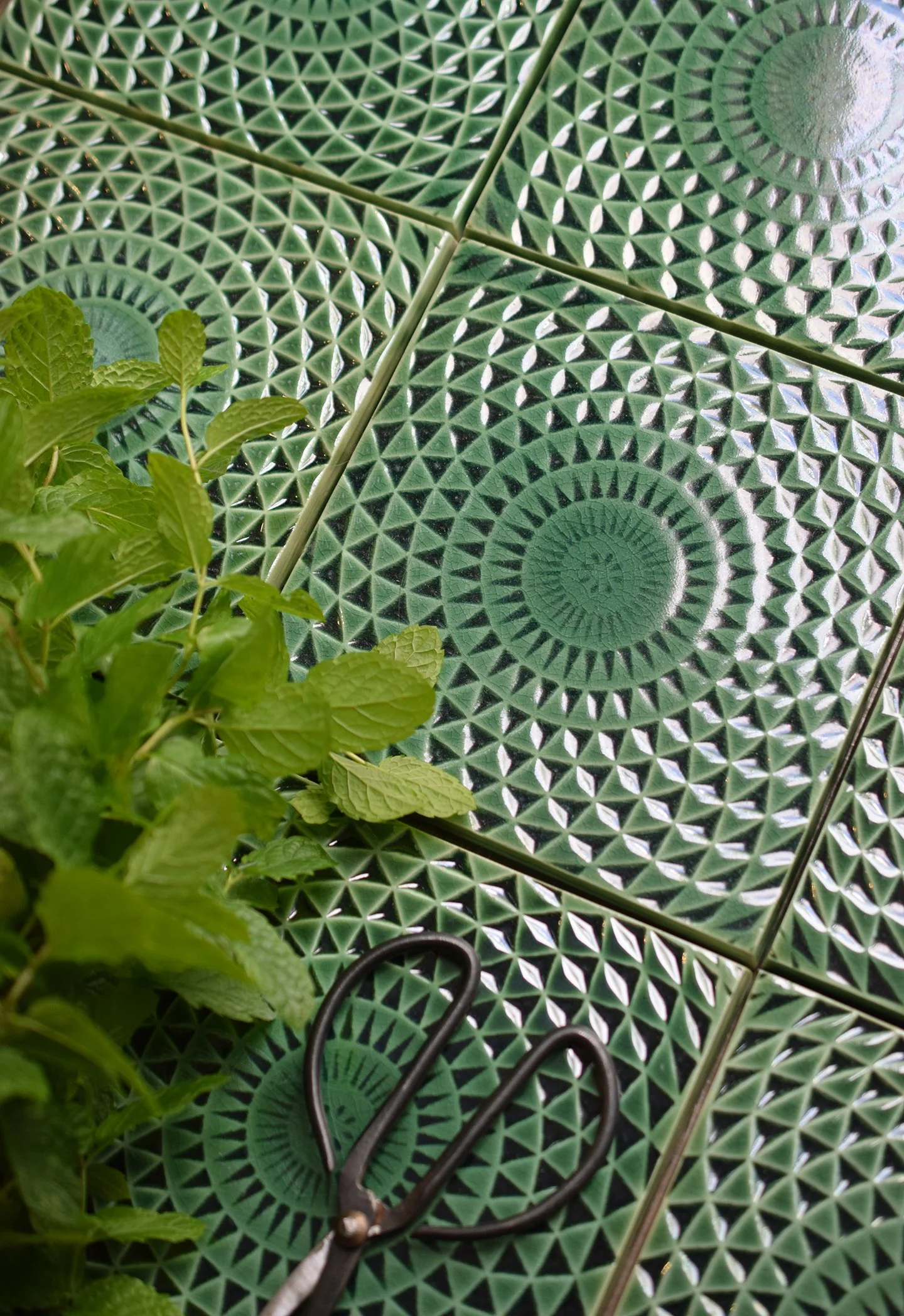
Through observation, patience, and attention to detail, everyday objects and scenes are stylistically transformed into this collaborative tile line with Adam Field. Adam is known for his carving, line work, and precision within his work, and these Terrascape tiles directly correlate to his pottery. Adam and Forrest have been close friends and colleagues for 25 years and have had parallel and complimentary careers within the ceramics field. They are excited about collaborating for the first time on this line of tiles that combine imagery from the natural world and the precision of geometry and line.
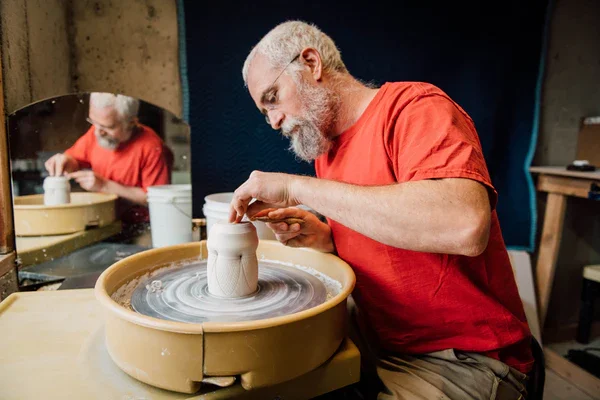
About Adam: Born and raised in Colorado, Adam earned his BA in art from Fort Lewis College. For two years, he immersed himself in the culturally rich art scene of the San Francisco Bay Area, where he began his full time studio practice. He spent most of 2008 in Icheon, South Korea, studying traditional Korean pottery making techniques. After maintaining his studio in Durango, CO for 5 years, Adam moved to Helena, MT in 2013 where he was a long-term resident artist at the Archie Bray Foundation for Ceramic Arts. Adam is now a full time studio potter in Helena, MT. His works are included in private collections and kitchen cabinets internationally.
Q + A with Adam Field
1. What was the tile design process like for you? Was moving from 3D to 2D a struggle or did you enjoy the process?
Designing tiles was a refreshing and exciting shift from my usual work on the potter’s wheel. While I’m used to carving patterns in response to the form of each pot, working with tiles allowed me to explore repetition, rhythm, and pattern in a whole new way.
I drew from my own photographs and used digital tools to translate small visual elements into dynamic, repeatable designs. It was rewarding to see how a single motif could transform across a larger field of tile. The process opened up a new creative direction for me—one that still connects to my love of pattern and detail, but in a format that’s striking, versatile, and accessible.
2. Where is your studio? Is there anything about your location that inspires you?
My studio is located on the western outskirts of Helena, Montana, surrounded by open space and expansive views in every direction. The natural world around me is a constant source of inspiration—especially the patterns found in plants, snowflakes, and geological formations. Whether it’s the spiral of a pine cone or the intricate geometry of ice crystals, these naturally occurring designs inspire me to be an active participant in pattern-making, echoing the beauty I see around me.
3. As someone who takes a sketchbook with them basically everywhere, I'm interested in how artists move through the world. What is your process for taking in inspiration day to day and how does that translate to your work?
I see the world through the lens of a photographer. I took my first darkroom photography class at age 11 and continued studying photography through college, where I eventually discovered ceramics. While my hands are now more often in clay than in developer trays, that photographic way of seeing—framing, focusing, noticing detail—still shapes how I move through the world.
When something catches my eye, I reach for my camera. For pots, I often treat the form itself as my sketchbook, carving directly onto small pieces to work through ideas. For the tile project, I leaned back into photography—using my own images and digital tools to isolate moments and develop them into repeatable, layered patterns.
4. If you could tile any location in your home with this tile what would it be?
Absolutely our new kitchen—actually, that’s the plan. We love to cook and spend a lot of time in that space, so it feels like the perfect place for something both functional and beautiful. Our kitchen features natural wood surfaces and clean lines, and these tiles will bring a subtle, abstract counterpoint that adds depth and visual interest while still feeling balanced and intentional.